 TERBIS
Some links on this site are affiliate links. This means I may earn a small commission if you purchase through them, at no extra cost to you.
Books
Kortare och mer polemisk än Antifragile, med tydliga kopplingar till bolagsstyrning, politik och risktagande på andras bekostnad. Adlibris/Bokus säljer den svenska översättningen ("Skin in the game: vikten av delad risk"); Amazon.se listar den engelska originalutgåvan.
Filosofiskt bred och inte alltid lättillgänglig i strukturen, men innehåller flera av de mest citerade idéerna inom modern riskhantering och strategi.
Filosofiskt bredare och mer polemisk i tonen än de mer tekniska titlarna i serien – läsvärd även för den som bara vill ha ett bättre språk för osäkerhet, inte en metod.
En tyngre och mer abstrakt läsning än Heath-böckerna – bäst för den som redan är såld på idén och vill ha ett strukturerat ramverk att arbeta med.
Lättillgänglig och exempeltät – sannolikt den mest naturliga "första boken" för den som vill förstå positiv avvikelse utan att gå till Pascale/Sternin direkt.
Praktiskt inriktad och fallstudiebaserad, med utgångspunkt i Sternins arbete mot barnundernäring i Vietnam – visar hur metoden spridits till allt från sjukhusinfektioner till organisationsförändring.
En klassisk, praktiskt inriktad introduktion till kvalitetsverktyg – teknisk men tillgänglig, och fortfarande refererad inom Lean och Six Sigma.
Presenterar Theory of Constraints i romanform snarare än som en traditionell managementbok – en av de mest sålda böckerna inom produktions- och verksamhetsstyrning.
Kort, praktisk och inflytelserik – grunden till mycket av modern kvalitets- och processtänkande, långt utanför bilindustrin.
Beskriver samma worse-before-better-fenomen som artikelserien, fast ur ett praktiskt ledarskapsperspektiv snarare än ett systemteoretiskt.
Kort och ovanligt tillgänglig – sannolikt den mest naturliga boken att rekommendera för den som är nyfiken men inte vill ha en hel kursbok.
Omfattande och delvis tekniskt tung – snarare kurslitteratur än en helgläsning – men den mest heltäckande boken i ämnet för den som vill på djupet.
Betydligt mer lättläst än Forrester eller Sterman, och sannolikt den bästa boken att rekommendera till en läsare som vill ha en första, praktisk introduktion till systemtänkande.
En tung, teknisk originaltext snarare än en lättillgänglig introduktion – mest relevant för den som vill gå till källan för system dynamics, inte en första bok i ämnet.
Boken finns bara i tyskt original. Sammanfattningen ovan är vår egen, på svenska, och inte en officiell översättning av Sieberts text.
Betydligt mer tillgänglig och praktiskt inriktad än Kahns originaltexter – en naturlig startpunkt för den som vill omsätta scenariotänkande i sin egen organisation.
Tyngre och mer akademisk än senare böcker i genren, men här föddes metoden – läsvärd för den som vill förstå scenariotänkandets ursprung, inte bara dess praktiska tillämpning.
A practical handbook for implementing OKRs in organizations — goes deeper than the motivation into real pitfalls and implementation details.
Doerr's both inspiring and practical guide to the OKR model that Google used to grow from 40 to 70,000 employees.
MIT CISR's three paths (improve, wrap, sell) and the five capabilities that decide whether you can actually monetize data — grounded in nearly three decades of research, but written to be read across the organization, not just by the data team.
The practical complement to Rumelt — a simple question framework (where to play, how to win) built on one of the most-cited turnarounds in American business.
Rumelt's follow-up to Good Strategy/Bad Strategy — less about what a strategy is, more about how to actually find the right diagnosis when reality is messy.
The book behind the whole idea of a strategy kernel — uncomfortably simple, and uncomfortably good at revealing when a document is only pretending to be a strategy.
Ett konkret ramverk — fem pelare: ansvar, risk, incident, leverantör och uppföljning — för att omsätta NIS2-kraven i praktisk bolagsstyrning. Mer handfast och mindre juridiskt än de flesta NIS2-texter jag stött på, skriven direkt för styrelserummet snarare än för compliance-avdelningen.
A shorter, more practical text on the art of asking instead of assuming — especially valuable for anyone (like me, sometimes) who's quicker to offer an answer than to ask a real question. Schein calls it "humble inquiry": building relationships by genuinely wanting to know, not by demonstrating that you already do.
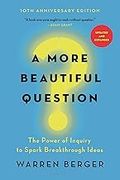
Berger shows how companies like Google, Nike, and Airbnb were built on the ability to ask fundamental, game-changing questions — and offers a simple "why / what if / how" structure for getting there yourself. A good complement to Gregersen: more toolbox, less research depth.
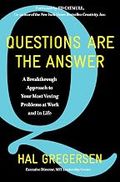
Gregersen spent years studying what makes breakthrough ideas emerge — among entrepreneurs, researchers, leaders. The conclusion is as simple as it is uncomfortable: what separates a breakthrough from a standstill is rarely a better answer, but a better question. The book I think of most often when I feel stuck at the wrong level of a problem.
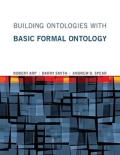
Barry Smith's best-known standalone book on ontology (2015, MIT Press) — more practical and less philosophically dense than the Blackwell chapter, focused on how to actually build ontologies that work in real information systems.
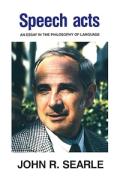
The book that put words to something I'd suspected for a long time: that speaking isn't just describing the world, it's doing something in it. Promising, naming, or warning aren't statements about an action — they ARE the action. Sounds like a philosophical nicety until you realize it's exactly why an AI that only “describes” can never quite act on your behalf — it's missing the performative part.
Demanding but central — the work that, more than any other, made “meaning is created through use” self-evident within philosophy. Wittgenstein's idea of language games is the simplest explanation I know for why a word can mean different things in different contexts without being vague or wrong. Read it in small pieces, not in one sitting — that's how it's written.
Not an easy read — not by a long shot — but the book where the idea that “the map is not the territory” was first properly formulated. I recommend it mostly so you know the origin, not so you necessarily plow through all eight hundred pages. Read a summary first, and go to the original if the thesis grabs you.
A practical counterweight to the more academic books on this list — concrete tools for not being fooled by your own words. Hayakawa's point about confusing the map (the word) with the territory (reality) is easy to understand and surprisingly hard to remember in the moment, especially in meetings where the language has already decided the outcome before the discussion even starts.
Pinker at his best: accessible, funny, and still deeply scientific about how much meaning hides in simple words. He shows how even a swear word or a politeness formula reveals whole mental models of space, time, and social relationships — and suddenly you see the same patterns in how people talk to AI assistants. If you only read one book about language and thought from this list, make it this one.
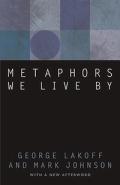
The book that made me realize how much of our “logical” thinking actually rests on metaphors we never question. “Time is money,” “argument is war” — Lakoff and Johnson show that phrases like these aren't figures of speech but conceptual structures that actually shape how we reason. After this book you stop seeing metaphors as decoration and start seeing them as infrastructure.
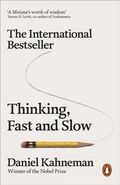
The book I return to most often when explaining why both humans and AI models fall for the same psychological tricks. Kahneman's System 1 and System 2 have become such common knowledge that it's easy to forget how radical it was to prove that our “rational” thinking is full of systematic shortcuts — framing, anchoring, availability. If you only read one book on decision-making, make it this one.
Reports & articles
Nicholas Carr's summary of Matthew Ebbatson's (Cranfield University) research on "skill fade" in pilots who fly with the autopilot engaged most of the time. The oldest and most-cited example of a pattern now starting to show up in other professions: automation making a task rare enough that the ability to perform it manually erodes without anyone deciding it should.

A multicentre study measuring what happens to endoscopists' own polyp-detection accuracy when AI support is removed after a period of AI-assisted colonoscopy. Accuracy dropped measurably — concrete, numbers-based evidence that competence can quietly erode under AI exposure, not just a theoretical concern.
Bygger på intervjuer med ett hundratal svenska styrelseledamöter och beskriver hur styrelserollen förskjutits från reaktiv kontroll till proaktiv, strategisk kraft — relevant bortom just AI-frågan. Fri rapport från Västsvenska Handelskammaren, ingen bok att köpa.
The chapter that ties philosophical ontology and practical AI tooling together in one breath — originally published in The Blackwell Guide to the Philosophy of Computing and Information (ed. Floridi, 2003), but freely available as a preprint. Good as a first stop if you want to see the whole field before diving into Quine or Gruber.
The article that turned the word ontology into a technical term in the AI world. Gruber's definition — “an explicit specification of a conceptualization” — is the one I come back to every time someone asks what an ontology actually is. Short, dense, still the most cited definition out there, and free to read, which feels unusually generous for a text this influential.
The philosophical foundation for asking what we actually mean when we say something exists — and Quine's answer, that “to be is to be the value of a bound variable,” turns out to be strikingly practical once you're building an ontology for an AI system. You assume it's a technical question until you realize it's philosophical all the way down. Short piece, but it names a problem I run into in almost every AI project: we rarely define what we mean by something “existing” in a system before we start building. A classic from 1948, but just as relevant today — much of the later writing on ontology, including the other texts on this list, builds directly on this argument. Freely available to read, no need to buy the whole essay collection just for this one.